IN THIS ARTICLE
The most expensive electrical mistakes in new builds and renovations aren’t the ones that go wrong — they’re the ones that get left until too late. Moving a power point after the walls are lined costs significantly more than planning for it upfront.
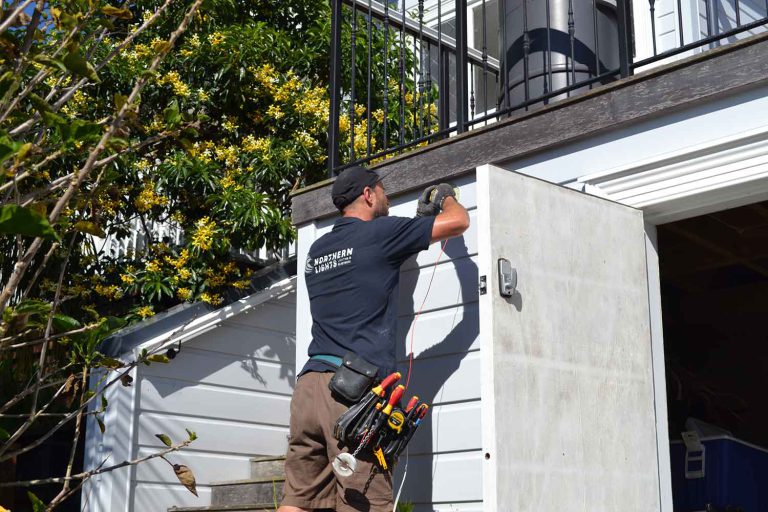
John Graham, Certified Master Electrician at Northern Lights Lighting and Electrical, explains what to think through before your electrician arrives on site.
When to involve your electrician
For a new build, your electrician should be involved at the plan review stage — before construction begins. They’ll work from your architectural plans and advise on circuit layout, switchboard sizing, and any compliance requirements that affect the build.
For a renovation, get your electrician in before walls are opened rather than after. Once linings are off, cable runs are straightforward. Once walls are re-lined, every change requires cutting and patching.
Power point planning
The most consistent feedback from Auckland homeowners post-renovation is that they didn’t plan enough power points. Modern households have more devices than older homes were designed for — and relying on extension leads and power boards long-term is both inconvenient and a safety risk.
When planning power point locations, think through:
- Where you charge devices — bedside tables, home office desk, kitchen bench
- Appliance locations — dishwasher, fridge, washing machine, dryer all need dedicated points
- Outdoor areas — deck, garage, garden shed
- Future-proofing — if you’re likely to add a heat pump, EV charger, or spa pool in the next 5–10 years, run the conduit now
A good rule of thumb: wherever you think you need one power point, plan for two.
Lighting planning
Lighting decisions need to be made before the ceiling is lined — once the plasterboard is up, adding a fitting requires cutting and patching. Key decisions:
Fitting type per room — downlights, surface-mounted, pendants. Each requires different rough-in work. See our guide to downlights vs ceiling lights for room-by-room guidance.
Switch placement — think about traffic flow through the space. Two-way switching (controlling one light from two locations) is straightforward to wire during build and frustrating to retrofit later.
Dimmer circuits — if you want dimmable lighting in living areas or bedrooms, specify this during the rough-in. It affects which fittings and switches are specified.
Outdoor lighting — security lighting, pathway lighting, deck lighting. Sensor-activated outdoor lights are worth planning for even if you don’t install them immediately — getting the wiring in during build costs far less than retrofitting.
Switchboard sizing
A new build or major renovation is the right time to install a switchboard with capacity for the home’s future needs — not just today’s. Consider:
- Heat pump circuits (one per unit)
- EV charger circuit (32A dedicated)
- Spa pool or outdoor kitchen circuit
- Smart home system if planned
Adding capacity to a switchboard during build is modest in cost. Adding it later means disruption and additional labour.
What does electrical work cost on a new build?
| Scope | Typical cost range |
|---|---|
| Full electrical fit-out, standard 3-bed home | $15,000 – $25,000 |
| Full electrical fit-out, 4–5 bed home | $22,000 – $35,000+ |
| Partial renovation (kitchen or bathroom) | $3,000 – $8,000 |
These are guide ranges only — the only accurate figure comes from a quoted scope of work. For LED lighting upgrades as part of a renovation, see our residential lighting service.
Common questions
Do I need a building consent for electrical work?
Electrical work is consented through the electrical licensing system (EWRB), not building consent. Your electrician provides a Certificate of Compliance on completion.
Can I change my mind about power point locations after rough-in?
Yes, but it adds cost and time. Changes before walls are lined are straightforward. Changes after lining require cutting, re-cabling, and patching.
How many circuits does a typical Auckland home need?
A modern 3–4 bedroom home typically needs 15–25 circuits — lighting, general power, wet areas, kitchen appliances, heat pump, and dedicated circuits for high-draw appliances. Your electrician will size this based on the actual scope.
Planning a new build or renovation in Auckland?