IN THIS ARTICLE
Auckland has an unusually high proportion of pre-war and post-war bungalows and villas. Many of them are beautiful. And many of them still have the original wiring.
If your home was built before the 1960s — and hasn’t been rewired since — there’s a good chance that wiring is VIR or TRS cabling. Here’s what that means, from John Graham, Certified Master Electrician at Northern Lights Lighting and Electrical.
What is VIR and TRS cabling?
VIR (Vulcanised Indian Rubber) and TRS (Tough Rubber Sheathed) were the standard wiring types used in New Zealand homes from the early 1900s through to the mid-20th century. They were reliable for their time. The problem is the materials.
The rubber insulation on VIR and TRS cable degrades over time. It becomes brittle, cracks, and eventually crumbles — exposing live conductors. This process accelerates with heat, so wiring near light fittings and inside ceiling spaces deteriorates faster.
Why is it a problem?
Exposed or crumbling insulation on live wiring is a direct fire hazard and an electrocution risk. Beyond that:
- VIR and TRS cabling is not compatible with modern RCD safety switches — so circuits wired with it can’t be properly protected
- The conductors themselves are often aluminium rather than copper, which creates connection problems at outlets and switches
- Insurance companies and lenders increasingly ask about wiring age and condition — old rubber-insulated wiring can create complications at sale or renewal
How do you know if your home has it?
The clearest indicator is your home’s age. Auckland villas and bungalows built before the 1960s very likely still have at least some original wiring.
Visually, VIR cable has a cloth-covered outer sheath, often black or brown. TRS has a rubber outer sheath that may appear grey or black and will look aged and cracked if you can access it in the ceiling or switchboard space.
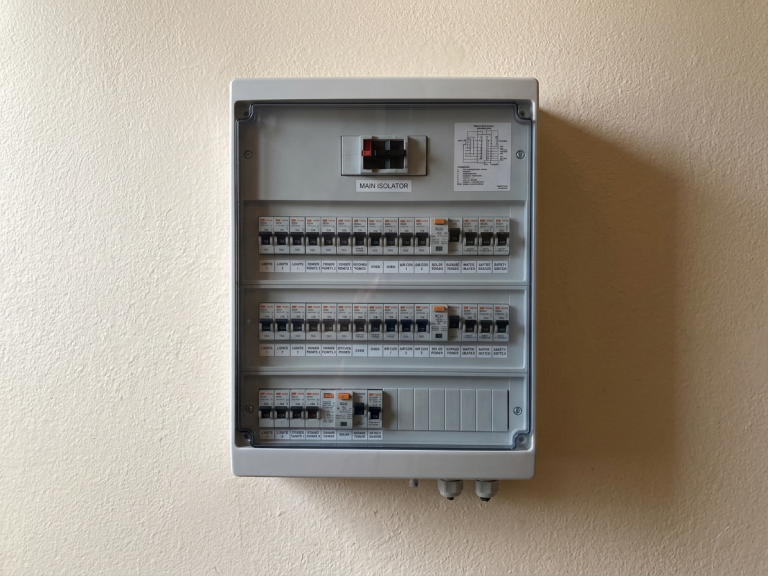
Your switchboard is often the best place to check — if cables entering the board have a cloth or obviously rubber outer covering, it’s worth having a licensed electrician assess the extent of the original wiring.
Do you need a full rewire?
Not necessarily. In many Auckland homes, original VIR or TRS cabling is mixed with later-replacement wiring. An inspection will tell you what proportion of the home is still on old cabling and whether targeted replacement or a full rewire is the right approach.
At Northern Lights Lighting and Electrical, we assess Auckland villas regularly. We’ll tell you clearly what we find and what the options are.
What does rewiring cost in Auckland?
| Home type | Typical cost range |
|---|---|
| Small 2–3 bedroom home, good access | $8,000 – $12,000 |
| Standard 3–4 bedroom home | $12,000 – $18,000 |
| Large home or difficult access | $18,000 – $28,000+ |
These are guide ranges only. A free site assessment gives you an accurate figure for your specific property.
Common questions
Is it illegal to have VIR or TRS cabling?
It’s not automatically illegal to have it — but it must be in safe condition, and it can’t be connected to modern RCD protection. In practice, deteriorated rubber-insulated wiring needs replacing.
Can I sell my home with VIR or TRS wiring?
Yes, but it often needs to be disclosed and can affect buyer confidence. An updated Certificate of Compliance for rewired sections is useful documentation to have.
What does rewiring an Auckland villa typically cost?
For a standard 3–4 bedroom villa, a full rewire typically ranges from $12,000–$18,000. A free assessment gives you an accurate figure for your specific home.
Think your villa might have old cabling?