IN THIS ARTICLE
Bedroom lighting is worth thinking through properly — it’s one of the few rooms where you need the lighting to do several different things at different times of day. Getting it wrong means either a room that’s too bright when you want to sleep, or too dark when you want to read.
Here’s a practical approach, from John Graham, Certified Master Electrician at Northern Lights Lighting and Electrical.
Layer your light sources
The most effective bedroom lighting uses at least two layers — general lighting for when you need to see the whole room, and task or ambient lighting for reading and winding down.
General lighting — a ceiling fitting (oyster light, pendant, or downlights around the perimeter) that illuminates the whole room when needed.
Task lighting — bedside lamps or wall-mounted reading lights positioned at reading height. These should be on separate switches from the general lighting so you can use them independently.
Ambient lighting — LED strip lighting behind a headboard, under a bed base, or along the top of a wardrobe creates low-level ambient light that’s much better for winding down than having the main light on. This is a relatively simple addition during a renovation.
Where to position downlights in a bedroom
The most common mistake with bedroom downlights is positioning them directly over the bed. Lying in bed looking straight up at a downlight creates glare that makes the room feel harsh rather than relaxing.
Position downlights toward the edges of the room — over wardrobes, dressers, and walkways rather than directly overhead. This gives you good general illumination without the glare issue.
A dimmable circuit for bedroom downlights is worth the small additional cost — being able to dial down the brightness in the evening makes a real difference to the feel of the room.
Pendant lights in bedrooms
A pendant or chandelier over the centre of the bedroom can work well as a statement fitting, particularly in rooms with higher ceilings. A few practical points:
- The fitting needs to be wired before the ceiling is finished — plan it during a renovation, not as an afterthought
- In standard 2.4m ceiling height bedrooms, keep pendant fittings compact — a large hanging shade will feel too low
- Central pendants are decorative rather than functional for task lighting — you’ll still need bedside lighting as well
Bedside lighting options
Plug-in bedside lamps are simple but create cord clutter. The cleaner solution is hardwired wall-mounted reading lights on either side of the bed — switched individually so each person controls their own. This requires wiring in the wall during a renovation.
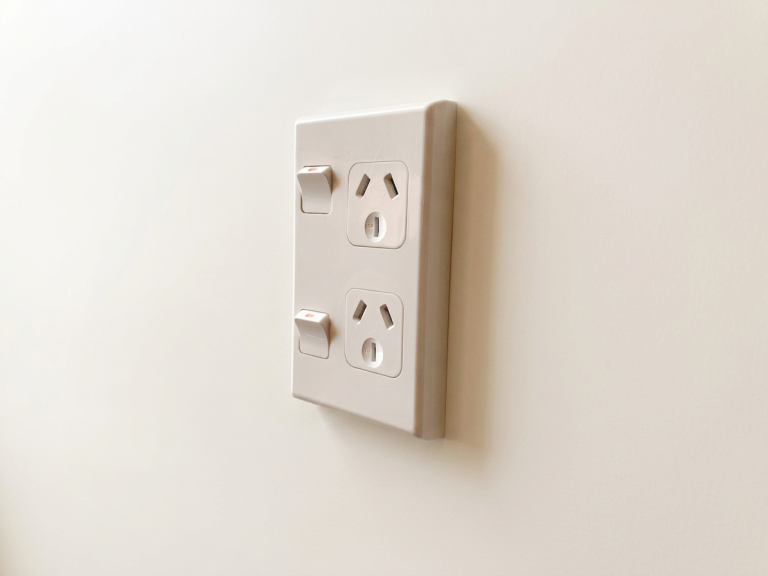
If bedside tables are already in place and you don’t want wall-mounted lights, a switched double powerpoint on each side of the bed keeps lamp cords tidy and out of sight behind the furniture.
What does bedroom lighting installation cost?
| Scenario | Typical cost range |
|---|---|
| Replace existing ceiling fitting (like-for-like) | $80 – $150 |
| Install new downlights in existing bedroom | $600 – $1,200 |
| Full lighting upgrade with new circuits and dimmer | $1,000 – $2,000 |
| Add hardwired bedside wall lights (per side) | $300 – $600 |
Common questions
Can I add downlights to my bedroom without a full renovation?
Yes — downlights can be added to an existing ceiling as long as there’s accessible ceiling cavity above. No plastering required in most cases.
Do I need a separate circuit for bedroom lighting?
Not necessarily — an electrician will assess whether your existing circuits have capacity. New circuits are added when needed.
What’s the best colour temperature for bedroom lighting?
Warm white (2700–3000K) is the standard recommendation for bedrooms — it’s softer and more relaxing than cool white (4000K+), which is better suited to kitchens and workspaces.
Want your bedroom lighting upgraded?