IN THIS ARTICLE
Solar installation in Auckland is more financially compelling than most homeowners realise — and more straightforward than it looks. This guide covers what a system actually costs in Auckland, what Vector requires, which retailers pay the best buy-back rates, and what you can realistically expect to save. All figures are Auckland-specific and current for 2026. For general background on solar in New Zealand, the EECA solar guide is a useful independent starting point.
What Does Solar Installation Cost in Auckland?
A fully installed 6.6kW solar system — the most popular size for Auckland homes — typically costs between $13,000 and $15,000. That’s the complete price: panels, inverter, mounting, wiring, Vector application, and connection to your retailer.
Here’s what goes into that figure:
| Cost Item | Auckland Cost | Notes |
|---|---|---|
| Solar system (6.6kW) | $13,000 – $15,000 | Fully installed |
| Battery storage | $5,000 – $15,000 | Optional add-on |
| EV charger integration | POA | Contact us for a combined quote |
| Vector DG application | Free | Residential Part 1A |
| Building consent | Free (exempt) | Most Auckland homes since Oct 2025 |
| Record of Inspection | $150 – $300 | Required post-installation |
| Import/export meter | Usually free | Most Auckland meters already compatible |
Two costs often surprise homeowners: the Vector application is free for standard residential systems, and Auckland Council no longer requires building consent for most rooftop solar installations — removing a cost that previously ran $1,060 to $1,200.
System Size Guide
Not every home needs a 6.6kW system. Here’s how system size maps to typical Auckland households:
| System Size | Panels | Fully Installed | Best For |
|---|---|---|---|
| Small (3kW) | 7 panels | $8,500 – $11,000 | Small home, low usage, limited roof space |
| Medium (5kW) | 12 panels | $9,000 – $13,000 | Average 3-bedroom home |
| Popular (6.6kW) | 15–16 panels | $13,000 – $15,000 | Most Auckland family homes |
| Large (10kW) | 24 panels | $15,000 – $18,500 | High usage, EV charging, large home |
Adding battery storage adds $5,000 to $15,000 depending on capacity. Most Auckland homeowners installing solar for the first time go without a battery — the payback period is shorter and the system still performs well.
How Solar Performs in Auckland
Auckland gets an average of 4.2 peak sun hours per day — less than Nelson or Hawke’s Bay, but more than Wellington or Christchurch. Combined with Auckland’s high power prices (averaging 32.4c per kWh, among the highest in New Zealand), the economics work strongly in your favour.
A typical 6.6kW system in Auckland generates around 9,180 kWh per year. At a 70% self-consumption rate — meaning 70% of what you generate is used directly in your home — that saves approximately $2,080 per year on power bills.
Roof orientation matters:
- North-facing: optimal, maximum output
- East-west split: works well, good for households using power morning and evening
- Pure south-facing: loses around 30% of potential output — generally not recommended
Auckland House Types and Solar Suitability
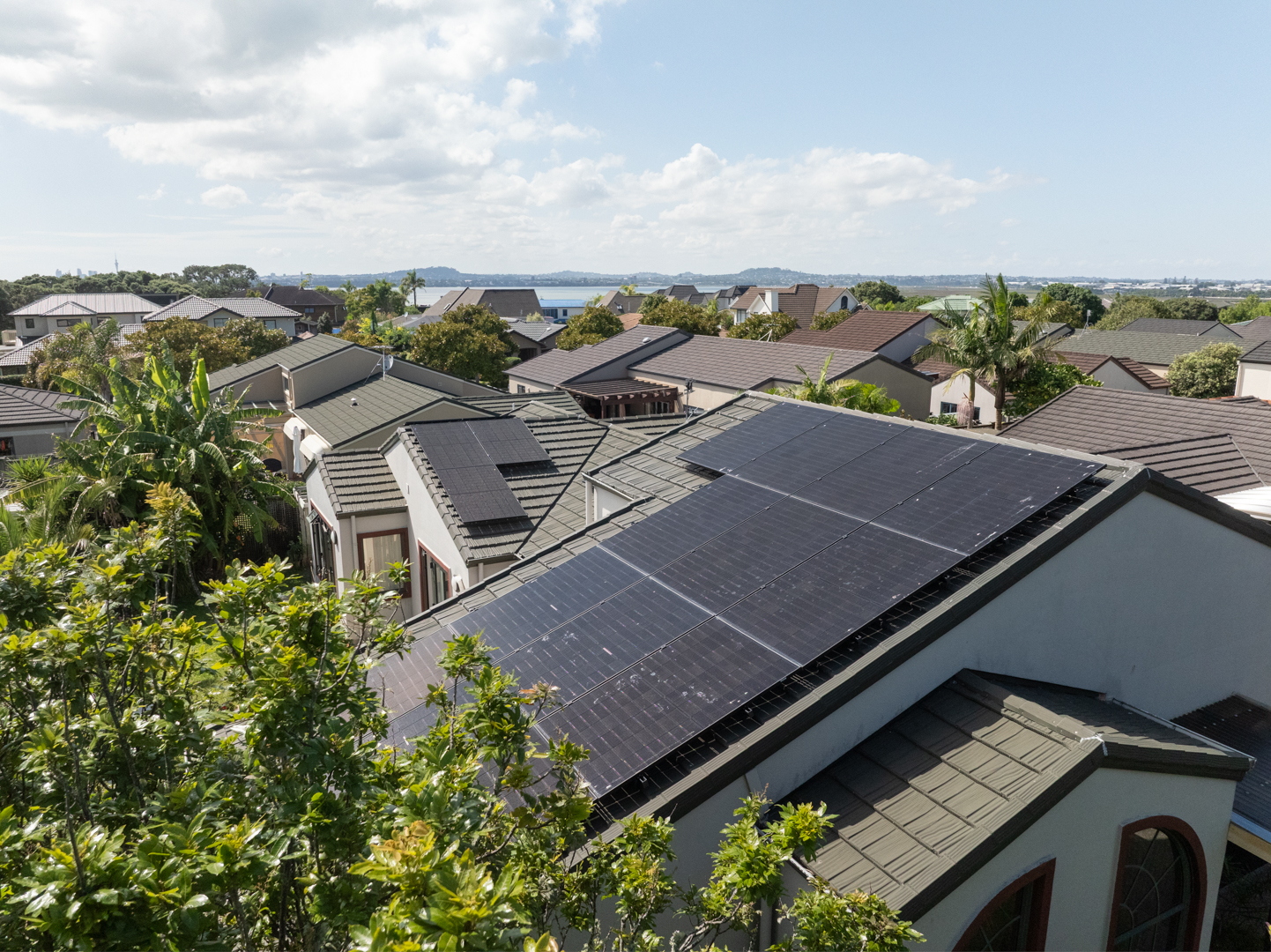
Auckland’s housing stock presents some specific considerations:
Villas and bungalows (pre-1940s): Often have steeply pitched roofs with good north-facing surfaces. The main consideration is roof condition — older iron or tile roofs may need attention before panels are installed. Switchboard upgrades are often done at the same time.
Weatherboard homes (1940s–1970s): Generally well-suited to solar. Roof pitch is typically appropriate and north-facing surfaces are common.
Tile roofs: Require specific mounting brackets. Adds marginally to installation complexity but is completely standard.
Modern homes (post-2000): Usually straightforward. Many already have import/export meters installed.
Vector Network Requirements
Every grid-tied solar system in Auckland requires approval from Vector, Auckland’s electricity distribution network. Here’s what that means in practice:
For standard residential systems (under 10kW):
- Submit a Distributed Generation (DG) application to Vector
- Vector must respond within 10 business days — if they don’t, the application is deemed approved
- The application is free for Part 1A residential systems
- Your registered electrician handles this as part of the installation
From 11 May 2026 — Dynamic Export: Vector has introduced Dynamic DG export connections, allowing eligible single-phase customers to export up to 10kW. The export limit adjusts in real time based on what the network can accommodate. To be eligible, your inverter must comply with AS/NZS 4777.2 and support CSIP communications.
After installation:
- Your electrician issues a Certificate of Compliance (CoC)
- An independent inspector issues a Record of Inspection (RoI) — $150 to $300
- Vector requires both before approving energisation
Total timeline from signed quote to switch-on: 4 to 8 weeks.
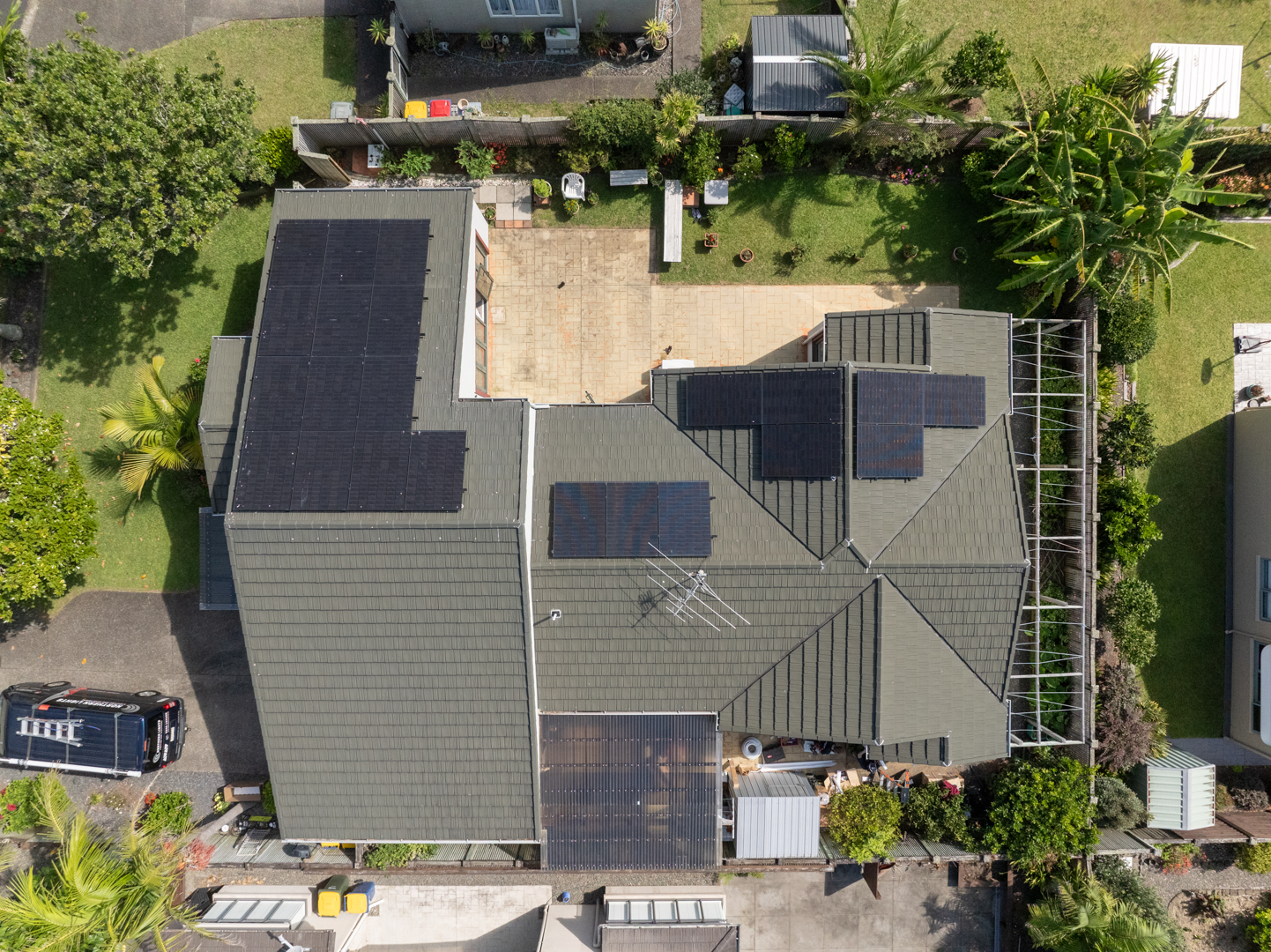
Feed-in Tariff Comparison — Auckland Retailers (2026)
When your panels generate more than you’re using, the excess is exported to the grid. Your retailer pays you a buy-back rate for this. Rates vary significantly — figures below are cross-checked against SolarScout’s buy-back rate comparison:
| Retailer | Best Rate | Type | Notes |
|---|---|---|---|
| Octopus (Peaker) | Up to 40c/kWh | Time-of-use | Winter peaks only, 5c off-peak overnight |
| Ecotricity | 21c/kWh peak | Time-of-use | 16c/kWh off-peak — best off-peak rate |
| Electric Kiwi | 23c/kWh | Check MoveMaster plan | Verify current rate |
| Mercury | 18c/kWh (ex GST) | Promotional | Via Harrisons promo, capped at 500kWh/cycle |
| Meridian/Powershop | 17c/kWh flat | Flat rate | Best simple flat rate |
| Genesis/Frank | 12.5c/kWh | Flat rate | Straightforward, no conditions |
| Nova | 10c/kWh | Flat rate | — |
| Contact | 8c/kWh | Standard | Prices by address — Good Charge rate varies |
Important: From 1 July 2026, the four largest retailers (Mercury, Genesis, Contact, Meridian — covering 87% of NZ connections) must offer time-of-use export plans. Rates move quarterly.
The number that matters most isn’t the buy-back rate. Most Auckland households export only 30–50% of what they generate. The other 50–70% is used directly in the home, offsetting power you’d otherwise buy at 28–35c/kWh. Self-consumed solar is worth 3–4 times as much as exported solar.
Payback Period
At current Auckland power prices and with a typical 6.6kW system:
- Annual savings: ~$2,080
- System cost: $13,000 – $15,000
- Payback period: 6 to 7 years
Auckland’s high power prices and reasonable sun hours put it in the strongest tier nationally for solar payback. Wellington and Canterbury typically run 8–10 years. Otago and Southland can be 9–12 years.
Adding a battery extends the payback period by 3–5 years but gives you energy independence and backup during outages.
Solar + EV Charger: The Combined Install Advantage
If you have an EV or are planning to get one, installing your EV charger at the same time as your solar system makes financial sense. One Vector application covers both, and your solar generation can charge your car during the day — effectively driving on free fuel.
A 6.6kW system generates significantly more power than most Auckland households consume during the day — that surplus can go directly to charging your EV. Contact us for a combined solar and EV charger quote.
We install EV chargers across Auckland — see our EV charger installation page.
Frequently Asked Questions
A fully installed 6.6kW system — the most popular size — costs $13,000 to $15,000 in Auckland. Smaller 3kW systems start from $8,500. Battery storage adds $5,000 to $15,000 on top.
No — Auckland Council exempted most residential rooftop solar from building consent in October 2025. This removes a cost that previously ran $1,060 to $1,200. You do need Vector’s Distributed Generation approval, which is free for standard residential systems.
From signed quote to switch-on: 4 to 8 weeks. The physical installation takes 1 to 2 days. The longer steps are Vector’s DG approval (up to 2 weeks) and the independent inspection (Record of Inspection).
It depends on your usage pattern. Octopus Peaker pays the highest peak rate (up to 40c/kWh) but only during specific windows. For a simple flat rate, Meridian’s Solar Plan at 17c/kWh is the strongest. The buy-back rate matters less than you might think — self-consumed solar is worth 3–4x more than exported solar.
Yes — solar panels generate power from daylight, not direct sunlight. Output is reduced on overcast days but not eliminated. Auckland’s 4.2 daily peak sun hours account for the typical cloud cover.
Yes. Most modern inverters are battery-ready. Adding storage later is straightforward, though installing at the same time is more cost-efficient.
Vector is Auckland’s electricity distribution network. All grid-tied solar requires their Distributed Generation approval. For residential systems under 10kW, the application is free and Vector must respond within 10 business days.
Generally yes — solar is increasingly valued by buyers, particularly as power prices rise. A system with a remaining payback period is typically seen as an asset in Auckland’s property market.
Why Northern Lights Lighting and Electrical
- 4.9 Google Rating — 97 verified reviews
- Master Electricians NZ — Accredited, registered & insured
- 20+ Years in Auckland — 13,000+ jobs completed
Interested in solar for your Auckland home? Get in touch — we'll be offering solar installation once our full certification is in place.